
How Much MMA Training Do You Need Before Your First MMA Fight?
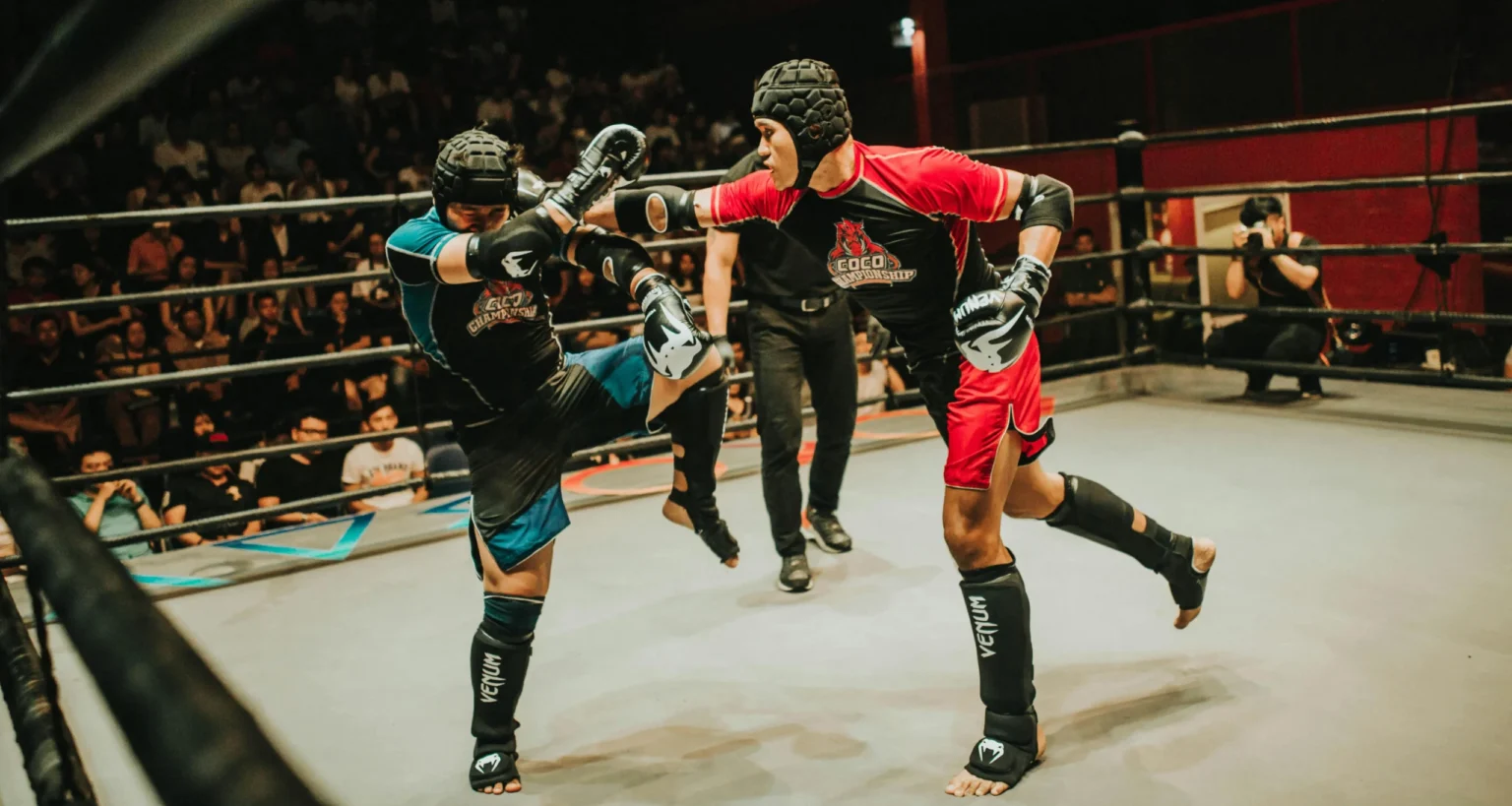
Photo Credit: Coco Championship on Pexels
If you have now been training MMA for a while and plan to compete seriously, I am pretty sure you must have asked yourself this question pretty often: “How long do I need to train before my first MMA fight?” or in cave man terms “How much MMA training before first fight?” The short answer? It depends.
The long answer—which actually matters—depends on your skill base, training quality, athletic background, mindset, and how seriously you approach preparation. MMA isn’t a movie montage where six weeks of hard work turns you into a cage-ready warrior. It’s a technical, punishing, and deeply strategic sport. Let’s break down what “ready” actually means.
But always keep in mind, the final say is always with your coach in terms of whether or not you are ready for a serious competitive fight.
That is why it is of the utmost importance that you choose the right MMA training camp and the right coach for yourself who will not bullshit you and try to milk you as a cashcow.
In this Article, I will try to answer the above question in every aspiring fighter’s mind in as much detail as I can. We will discuss:
- Understanding What an MMA Fight Really Demands
- MMA Is Not Just Fighting — It’s a Sport! Let’s understand the rules
- Why “Street Tough” Doesn’t Translate well to the Cage
- The Core Skill Sets Required Before Your First Fight
- Striking Fundamentals
- Muay Thai & Kickboxing
- Grappling Fundamentals
- Wrestling for MMA
- Brazilian Jiu-Jitsu (BJJ)
- Physical Conditioning Requirements
- Cardiovascular Endurance
- Strength & Power Development
- Mobility, Flexibility, and Injury Prevention
- Mental and Psychological Readiness
- Composure Under Pressure
- Fight IQ and Decision-Making
- Sparring and Live Training Benchmarks
- Controlled Sparring
- Full MMA Sparring
- How Long Does It Really Take? (Realistic Timelines)
- Training 3–4 Times a Week or 5-6 times a week?
- Amateur vs Professional Debut Expectations
- Amateur MMA Requirements
- Professional MMA Requirements
- Common Mistakes First-Time Fighters Make
- How Coaches Decide You’re Fight-Ready
- Final Thoughts: Quality Over Calendar Time
- FAQs
Understanding what an mma fight really demands?
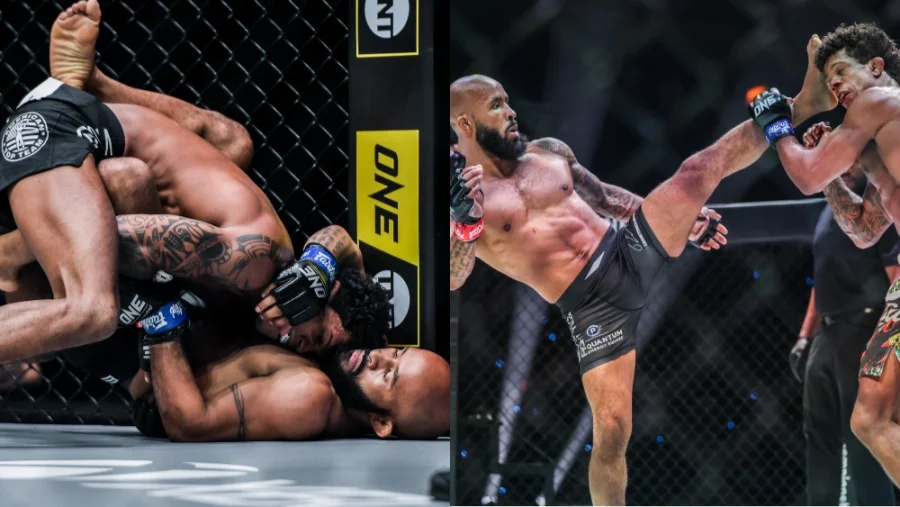
Photo Credit: Evolve MMA and One championship
Before counting months or sessions, you need to understand what you’re preparing for. An MMA fight is not a street brawl—it’s a high-intensity, rule-bound athletic contest that exposes every weakness you have.
MMA athletes are some of the most well rounded and fittest athletes in the world.
An MMA Athlete not only requires a really versatile number of skills in various disciplines of Martial Arts but also requires a workhorse cardio engine in terms of cardio that will last him/her the entire duration of the fight.
An MMA athlete should have all their three cardiovascular systems properly developed – The Aerobic, Anaerobic Lactic and Anaerobic Alactic systems.
Combat Sports and specifically Mixed Martial Arts is one of the few sports that demands all the 3 energy systems to be properly developed in an Athlete.
And just having a strong engine is not enough, you should also develop enough strength, power and muscular endurance to actually be able to control your opponent, finish takedowns and execute strikes in the blink of an eye, finish holds and submissions etc. without your muscles getting fatigued.
Not just that you will also be needing a bulletproof psyche and a complete Samurai mindset when it comes to the mental aspect of the sport.
Every fight will be a test of not just your physical preparedness but also your Mental toughness.
So you should not just ask “How much Do I need to train before my first MMA fight?” or “how much MMA training before first fight?” but you should also ask is my mind and body prepared to handle the demands of an MMA fight?
MMA is not Just fighting, It's a Sport! Let's understand the rules
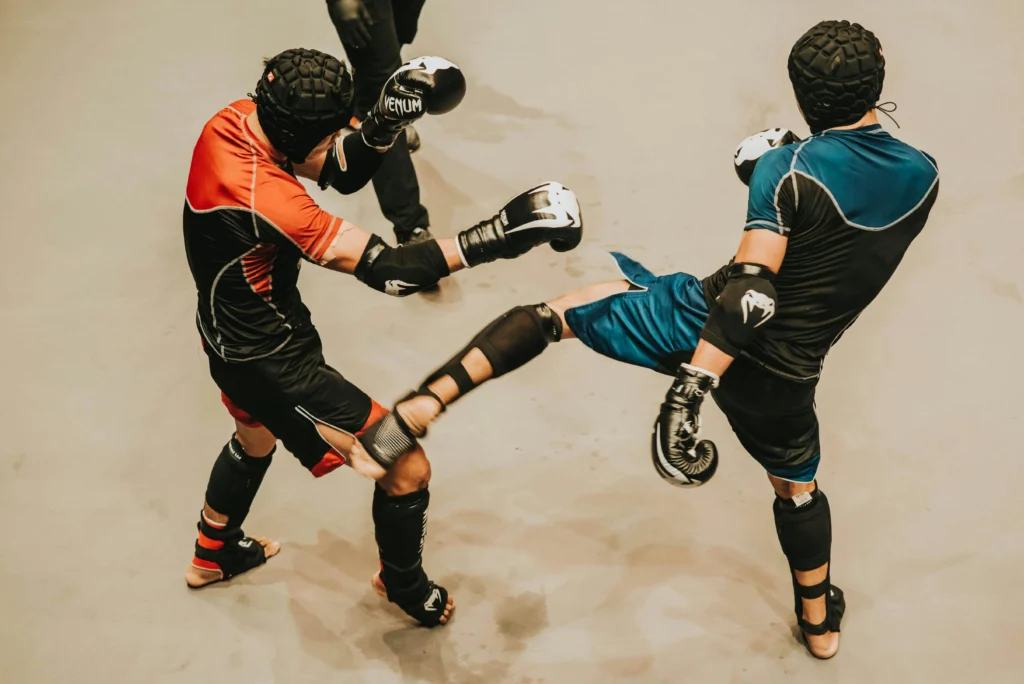
Photo Credit: Coco championship on Pexels
MMA combines multiple disciplines—boxing, Muay Thai, wrestling, and Brazilian Jiu-Jitsu—into a single competitive format. Fighters must manage distance, timing, energy systems, and strategy while dealing with real resistance. Training must reflect that complexity.
Before you dive into your first MMA fight, it is very imperative that you also have a very deep understanding of the ruleset and what is the scoring/ judging criteria that makes a fighter win the rounds and the fight in the judges’ scorecard.
If you are an absolute newbie to the sport, I recommend you start by reading the IMMAF Unified rules for Amateur MMA bouts and The Unified Rules of Pro MMA by UFC.
But let’s dive into the MMA scoring system in brief here.
Each round is scored on a 10 – 9 scoring system which is borrowed from Boxing.
The winner of each round gets 10 points from the judge and the loser gets 9 points or less.
Scoring criteria is based on Effective Aggression, Striking Dominance and Cage Control/ your ability to control your opponent in the cage against his will.
Fouls include Groin strikes, Hair Pulling, Fish Hooking, striking to the Spine and back to the head, eye gouging, grabbing the cage/ring rope to prevent takedowns or take support, scratching and biting.
For every unintentional foul you get a warning from the referee and after 2 warnings, the third unintentional foul may lead to a minus point and can also lead to Disqualification.
For intentional Fouls you may get a straightaway minus point and even lead to Disqualification. It is all under the discretion of the referee of the bout.
At the end of the fight the fighter with the most point on the judges’ scorecard wins the fight.
Apart from winning the fight on points, you can also end the fight with a Knockout, A submission or a TKO (Technical Knockout) wherein the opponent may not be intelligently defending himself (for e.g in a ground and pound scenario) or may not be able to continue the fight in event of a fight ending injury like a fracture, tear or excessive bleeding or stoppage by the doctor.
All Senior MMA bouts (for 18+ years of age) are full contact with strikes allowed to the head, body and legs.
Why "Street Tough" does not Translate well to the cage?
Now you might think you are always the baddest man in the room because you beat up some people in your school backyard fight or in your local pub/bar.
But let me get one thing clear, no matter how many people you beat up in a street brawl or how much “tough” you think you are, your “street tough” will not translate that well to the cage.
Sure, you need a big amount of mental toughness and not to mention physical toughness as well to step into a cage, but an MMA bout is a totally different ballpark!
In an MMA bout, you are gonna be facing off one on one against a highly trained opponent who will very likely be skilled in various disciplines of Martial Arts (unlike the street bums you have faced before) and who has been training for the past few weeks likely for the sole purpose of defeating you in a cage fight!
Street confidence doesn’t equal cage competence. Untrained fighters gas out within minutes, panic under pressure, and make predictable mistakes. The cage rewards preparation, not bravado!
Not to mention, the fights will be highly technical and test you both on a mental and physical level.
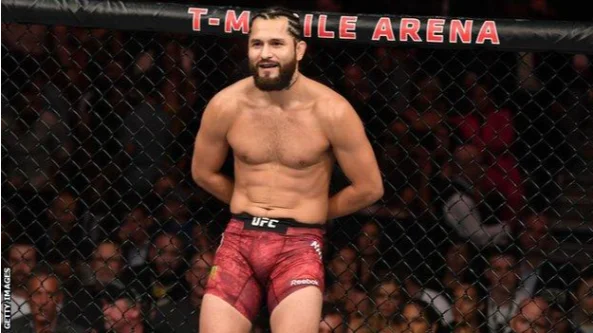
One of the most famous “street fighter” who transitioned to MMA is Jorge “Street Jesus” Masvidal and even he took his time at The American Top Team before transitioning into Professional Mixed Martial Arts.
The Core Skill Sets Required Before Your First Fight
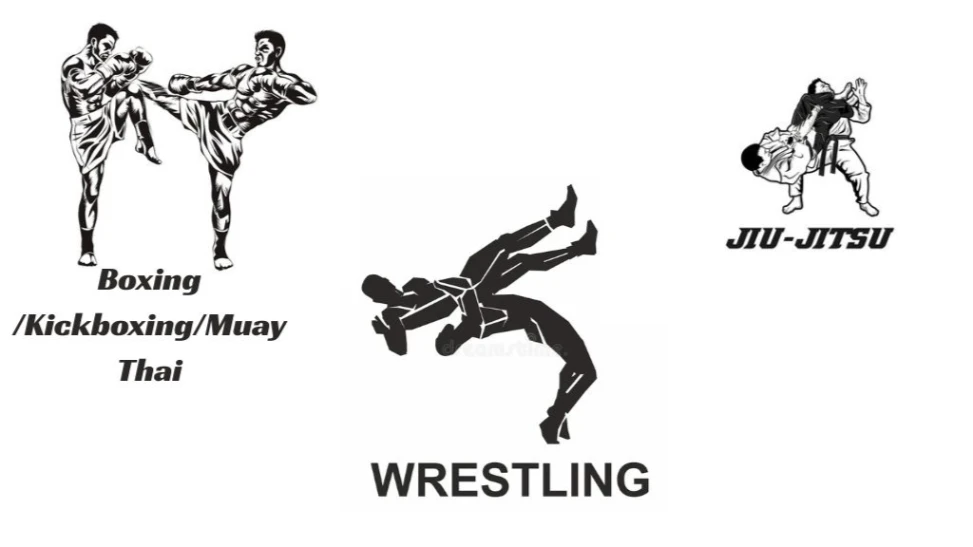
Now unlike other combat sports, MMA requires you to be competent in multiple sets of disciplines.
This does not mean that you cannot be a specialist like a Grappler, Submission or Knockout Artist etc. but you must at least be good enough in other areas of your game to compliment your skills.
For example, if you like standing up and striking you should at least have good basic takedown defense so that you do not get taken down.
Or if you are a Grappler, you should at least know some basic strikes in order to create opening s for takedowns.
So instead of asking “How much training is required before my first MMA fight?” or “how much MMA training before first fight?” you should instead ask “Do I have the core skillsets required for an MMA fight?”
Striking Fundamentals
Boxing for MMA
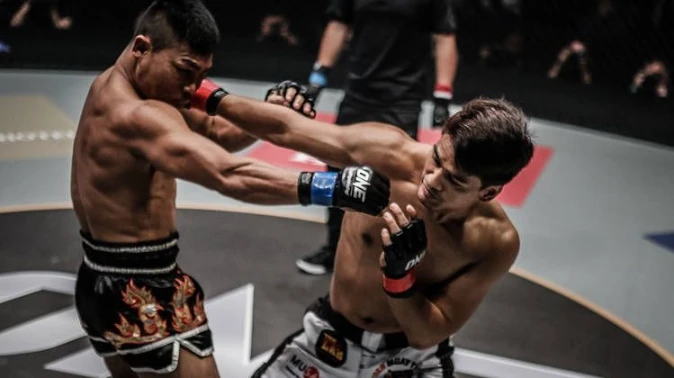
Photo Credit: Evolve MMA
Now MMA Boxing is absolutely different from your Classic Ring Boxing.
Firstly, you are going to have to worry about more than just 2 weapons which is the hands of your opponent. There are kicks, Knees, elbows, clinch and takedowns involved.
So even if you are from a Classic Boxing background, there are a lot of things you have to change and adjust before you step into the cage.
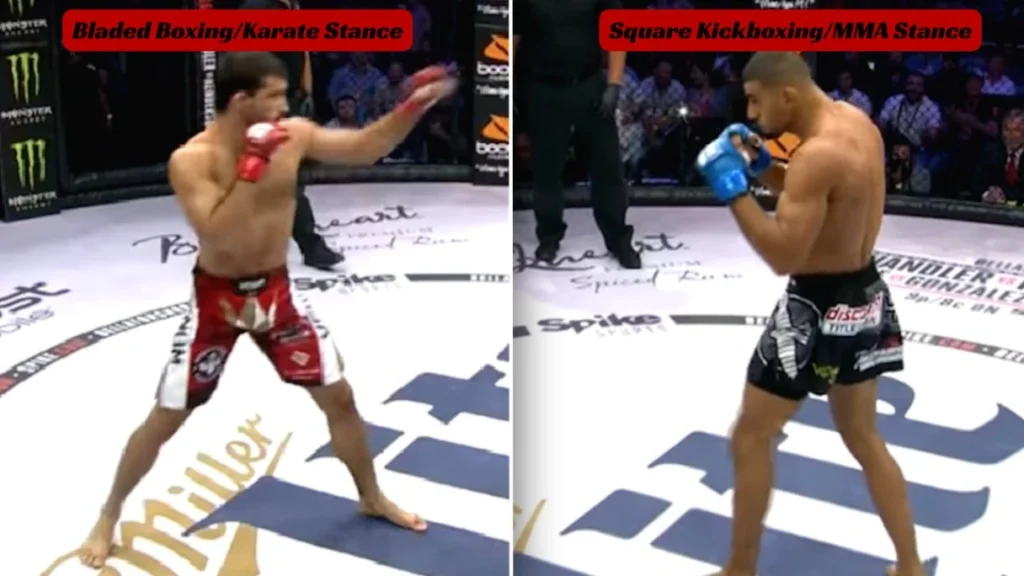
Your stance is going to be one of the first things you are going to have to change.
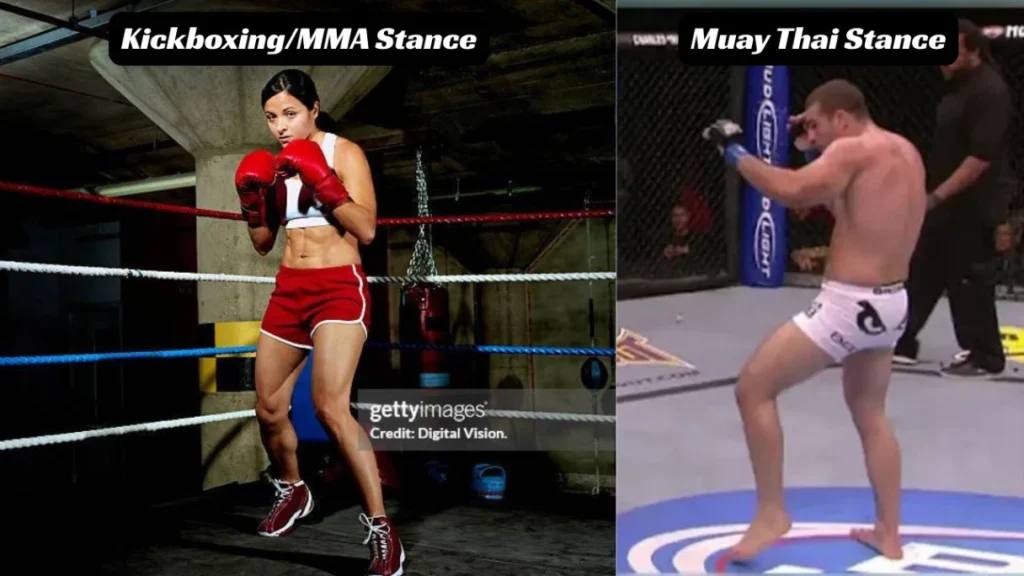
In Boxing you usually fight from a more bladed stance, but since low kicks and takedowns are involved in MMA, fighting from a more squared up kickboxing stance may be more beneficial for you since you can both block low kicks and sprawl easier to defend takedowns in a more squared stance.
Secondly, since you fight with smaller gloves in MMA (either in a 4 oz gloves or 8oz gloves) you can’t just passively shell up when you are eating strikes. You have to rely more on your head movement and having an active guard to defend strikes while also using hand trapping and even dirty boxing techniques to set up strikes.
And last but not the least since most of the times in Mixed Martial Arts, you will be fighting inside a cage and not a ring, your defensive tactics have to change when your back is against the cage.
You cannot do your Rope a Dope tactics like you do in the ring against the cage panel, so your movement and footwork will also be slightly different in MMA than classic Boxing.
Now Boxing is one of the most important fundamentals for MMA so you should dedicate a significant amount of your training sessions to learning MMA Boxing.
If you are interested in learning more in detail about specific Boxing techniques, you should learn for MMA, I recommend you go through this blog by Evolve MMA – The Best boxing techniques for MMA.
Muay Thai & Kickboxing for MMA
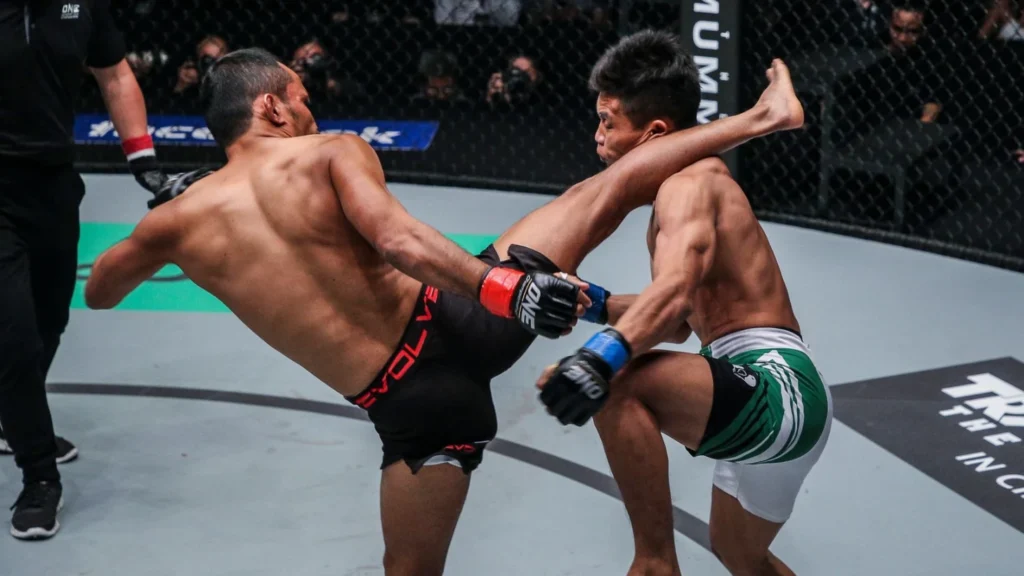
Photo Credit: Evolve MMA
Muay Thai is a great background to learn for MMA and is an absolute essential when it comes to MMA Striking.
Since the Muay Thai rules favor damage over volume, it translates really well to MMA Striking also where overall damage plays a big role in tipping the scorecards of the judges in your favor even though overall volume is also considered.
If you are someone who is planning to debut in Amateur MMA, I would also suggest you get some K1 Kickboxing rounds in as well.
As in Amateur MMA elbows are prohibited and Knees to the face are not allowed. Henceforth, in Amateur MMA your Kickboxing background and training plays a bigger role in striking than Muay Thai.
But nonetheless, Muay Thai is a great Martial Arts to have in your Arsenal for MMA since it teaches you how to stand your ground in the clinch, pummeling for better positions and attack set ups and overall clinch control and stability.
But there need to be some adjustments made for MMA if you are from a classic Muay Thai background.
The No.1 adjustment you need to make is for lower body takedowns and Judo hip throws and trips since they are allowed under the MMA ruleset, specifically in the clinch.
Another adjustment you need to make is to your stance, the classic Muay Thai Stance places you in a very upright position and most of your weight is on one leg which makes it very difficult to stop takedowns since you are already only balanced on one leg.
In this situation, switching to a more balanced kickboxing stance will be more beneficial for MMA bouts. Since your weight is balanced on both legs.
One more adjustment is that you will be fighting with smaller MMA gloves instead of Boxing gloves.
So, you will again need to rely more on your head movement and footwork to evade strikes instead of just blocking.
If you are more interested in what adjustments in Muay Thai, you need to make in order to transition to MMA I recommend you read this blog by Evolve MMA – Muay Thai and Boxing Adjustments for MMA Striking.
Grappling Fundamentals
Wrestling for MMA
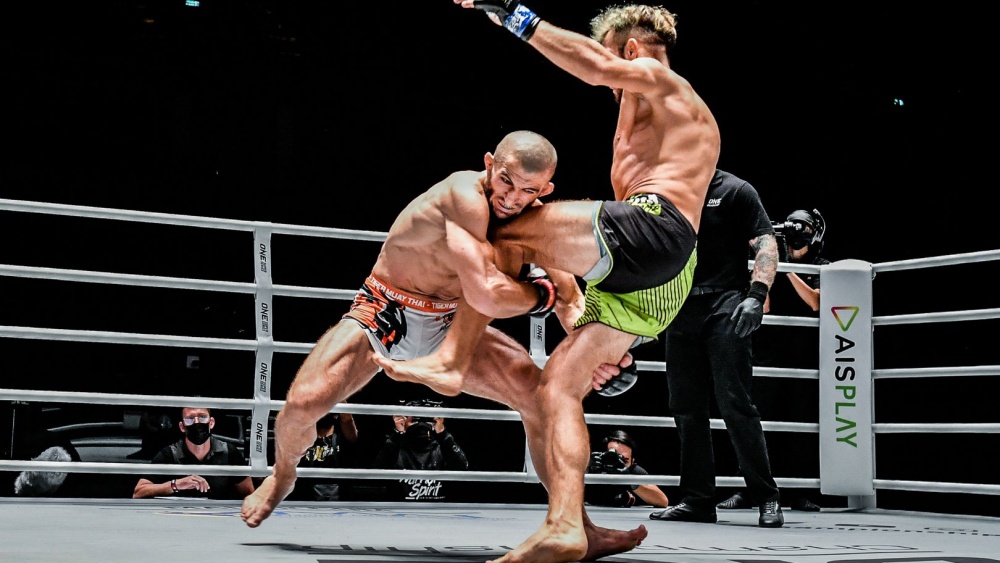
Photo Credit: Evolve MMA
Wrestling is a very important if not the most important element of Modern Day Mixed Martial Arts.
Even if you are not a grappler and a striking artist, you still need to learn at least basic Takedown Defense so that you can stay on your feet, work your striking and not get taken down.
Wrestling dictates where the fight will take place, whether on the feet or on the ground. Henceforth, you will notice that a lot of the dominant champions in the history of MMA come from a Wrestling background.
Not to mention wrestling demands a really high level of continuous explosive strength and power movements over a continuous duration hence a wrestler develops an unbreakable spirit, a large gas tank and the ability to enforce their will on the opponent against his/her wishes.
But again, since we are talking about real Wrestling skills that can be translated to MMA, we have to make some adjustments!
The number one adjustment you are going to have to make is to adjust your techniques to the more upright stance which is used in MMA as opposed to the more hunched over stance which is used in Classic Wrestling.
This makes certain techniques of Wrestling easier to execute in MMA while making others more difficult to execute due to the stance.
Techniques like the Double Leg and Single Leg Takedown become more easier to execute due to the upright stance whereas techniques like the Fireman’s Carry can be challenging to execute in the cage.

Another pro of MMA wrestling is since you have striking involved you can easily set up takedowns and throws using basic strikes and combos like the jab, cross and hook instead of complicated footwork and setups which is required to execute and set up takedowns in Pure Wrestling.
I am not going to write a separate section about using Judo for MMA since it can be clubbed together with MMA wrestling as well, specifically all the No Gi Judo takedowns and throws that can be executed from the clinch in MMA.
Which makes Judo also an excellent skill to have in your Mixed Martial Arts arsenal!
One more difference between Pure Wrestling and MMA wrestling is the cage/ring.
In pure Wrestling or Judo, the competition takes place on open mats with no substantial boundaries. Henceforth, when the fight goes outside the mat boundaries, both fighters are reset in the middle of the mat.
This is unlike MMA where the grappling exchanges continue even when one of the fighters’ backs is against the cage/ ring ropes.
So, it is very important to adjust your grappling techniques to work in cage/rope scenarios.
Henceforth it is very essential to learn Cage Control fundamentals and even some basic Cage Control Takedowns for MMA at the least.
If you want to know more about the basic fundamentals of MMA Wrestling, I suggest you read this blog by Evolve MMA on Basic Wrestling techniques to learn for MMA.
If you come from a Classic Wrestling background, I also suggest you work on some basic striking at least to create openings for takedowns and also get used to absorbing strikes if you have never done any striking before.
Brazillian Jiu Jitsu(BJJ) for MMA
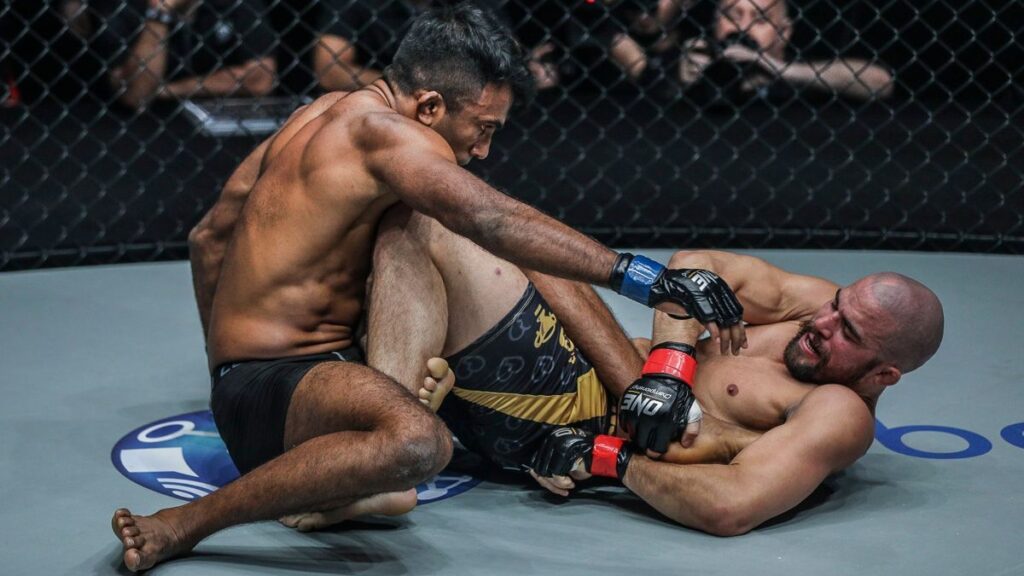
Photo Credit: Evolve MMA
Now you don’t exactly need a Black belt in BJJ to survive, but you must know the basic defenses, escapes and attacks from all the positions to survive in MMA.
You will also need to adapt a little bit of your Jiu Jitsu to the rules of MMA, as Ground and Pound is allowed from grounded positions in MMA. So, you need to position yourself in such a way if you are at the bottom that you are safe defensively from your Opponent’s attacks.
In the guard position you can also use ground and pound to set up your submissions which is a really useful tactic.
And when you are at the top, you should know how to position yourself in a more stable position for your Ground n Pound attacks.
Since there is no GI involved in MMA, henceforth you should focus more on NO GI BJJ for adapting to MMA.
Some Basic BJJ positions you should master for MMA:
- Basic Guard: Some Basic submissions and their defense like Kimura from the Guard, Armbar and Triangle. You should also learn at least two basic sweeps (Scissor Sweep, Elevator Sweep, Flower Sweep etc.) from the Bottom Position and at least One Guard Pass.
- Half Guard: Two Basic Sweeps (Like the Dog fight Sweep/Reversal) from the Bottom Position and how to defend yourself from Ground and Pound. One Basic Pass (like the Smash Pass) from the Top position.
- Side Control: Basic Submissions like the Kimura and Americana, how to control the opponent properly. And at least One escape and One Guard Retention technique from the Bottom (like the shrimp escape). Also mastering variations of the Side Control like the Scarf hold or Kesa Gatami and Reverse Side Control and their basics also help.
- Top Mount: How to properly stabilize yourself in the position on top for Attacks. Two Basic submissions like the Armbar and Arm Triangle. And at least One Basic escape like the shrimp escape to Half Guard when in the Bottom position and mastering One Basic sweep from the Bottom Position is recommended.
- North South: Basic Escapes like the windshield wiper from the Bottom Position or the Running Man Escape and Top Positioning Basics on how to control the opponent in Top Position. You can also master the North South choke from this position.
- Back Side Control: One Basic Escape or Reversal from the Bottom Position. How to properly maintain weight and control on Top when in this position for Ground n Pound and also how to transition to a Flat out Back Control Position.
- Back Control Seat Belt Position: How to initiate the Rear Naked Choke (RNC) and Armbar from this position when you are in control. Can also learn setups using Ground n Pound. And from the defensive position, the fundamentals of escaping from this position.
If you want to learn more in detail about MMA BJJ and want to learn hands on from an expert who’s been there and done it, you should definitely check out our semi-private beginners’ batch of BJJ for MMA classes at The Vanara Tribe.
So don’t just ask yourself, “How much MMA training before first fight?” or “How long should I train before my first Mixed Martial Arts fight?”, but ask “whether I have all the core BJJ skillsets required for an MMA fight?”
Physical Conditioning Requirements for your first MMA Fight
Cardiovascular Endurance for your first fight
No matter how much skill and experience advantage you have over your opponent, it does not matter for Jack if you get tired only after throwing 10 punches or defending just a single takedown.
Technique without conditioning collapses under fatigue. Your body and mind must be prepared for chaos which should be done in controlled environments in Training under expert supervision.
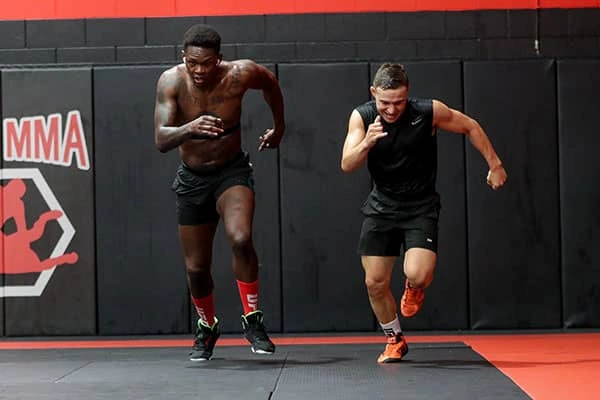
Most first-time fighters lose not because of skill—but because they gas out. You should comfortably be able to handle multiple 3-minute (for Amateur MMA bouts) to 5-minute rounds (for PRO rounds) at high intensity.
My HOT TAKE!
Long Distance running is overrated for Martial Arts conditioning while Sprints are underrated!
A Pro MMA fight is more a 3 x 5-minute Sprint than a 15-minute Marathon.
Now that said, you should not completely ignore Aerobic Endurance.
MMA is a unique sport that requires you to develop all the 3 energy systems – Anaerobic A lactic, Anaerobic Lactic and Aerobic System in your body.
So, to develop your Anaerobic A lactic systems I recommend doing intense Sprints, possibly uphill for at least 8 to 10 sets.
On the bags or pads you can throw short sprints of intensely fast punching combos or repeated kicks for 30 seconds and then rest for a minute or 30 secs (if you are in a good shape) and repeat this sprint for 8 to 12 rounds. When you get better you can work up to 15 or 20 rounds.
If you have access to an Air dyne Bike or a Treadmill you can also do Tabata Protocol of 20 secs work and 10 secs rest and repeat this for 8 to 10 sets. This is excellent for A lactic Conditioning.
To build your arms you can also do this on Battle ropes.
You can work on your A lactic energy system like this 2 to 3 times a week.
If you do not have access to an Air dyne bike or a treadmill you can also repeat these intervals on your daily jog or cycling route according to your Anaerobic threshold.
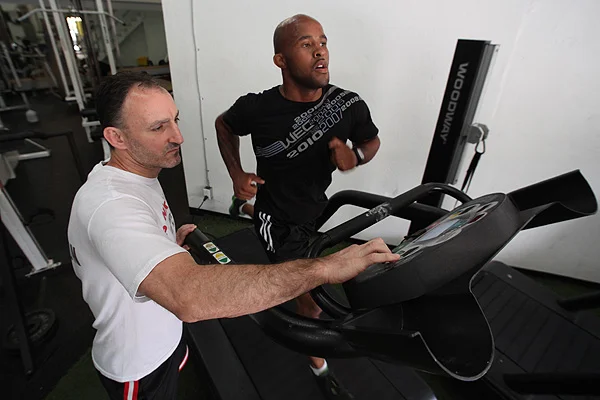
Which brings me to the Aerobic Energy system. For this I recommend long distance running, cycling or even swimming. For around 25 to 30 minutes Max.
If you like running, you can also challenge yourself by finding an incline which will also build up your leg strength.
You can work like this on your Aerobic System twice a week.
For your Anaerobic Lactic System, the best way to develop it would be rounds on the bags, pads or Sparring rounds/Live Drilling.
Depending on whether you are a Pro or Amateur you should at least be able to go for 5 rounds of 3 minutes (if you are an Amateur fighter) or 5 minutes (for Pros) without any discomfort.
Your Anaerobic Lactic System is what you will mostly be using throughout the duration of your fight while you will be using your Aerobic foundation during breaks to recover in between rounds.
And your Anaerobic A lactic system is what you will use when you try to finish your opponent (in ground n Pound positions, during Knockout exchanges and submission finishes) or in scramble exchanges for 10 to 15 secs.
Strength & Power Development for an MMA Fight
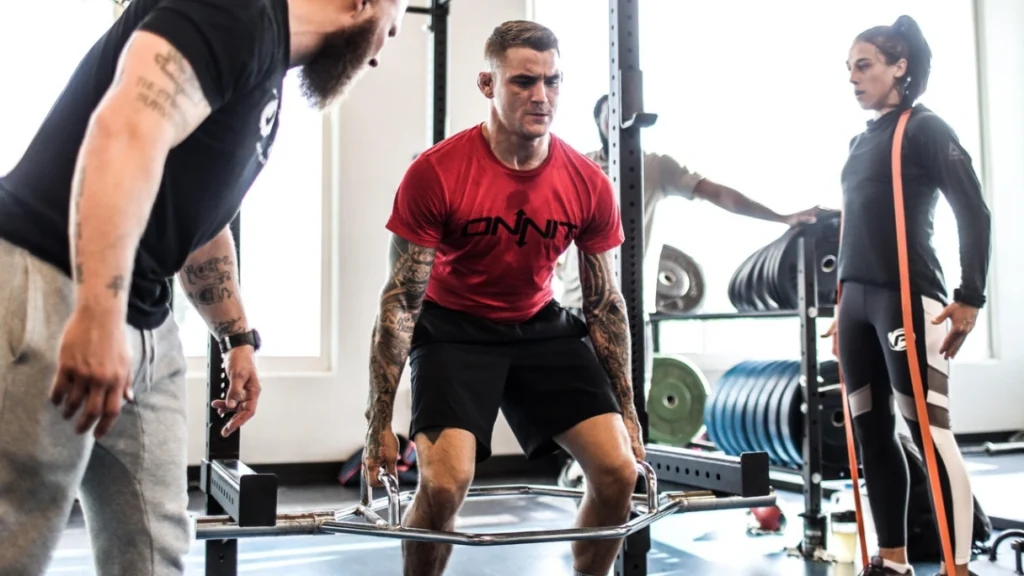
Your first MMA fight is not just going to be about “Functional Strength”.
I do not care if you can squat double your weight or deadlift the entire house or bench press. An MMA fight will test your strength in really awkward positions from really awkward angles.
When you are doing a squat, deadlift, bench press, shoulder press etc. you are doing these lifts from a balanced square stance.
But in a fight, you will very rarely be balanced, you need to learn how to lift and throw an unevenly weighing human being. So, you need to also learn how to lift, throw and carry uneven weighted objects like tires, kettlebells, sandbags, heavy clubs/Mugdars and Gadas or heavy mace.
Don’t Get me Wrong! do Not abandon your deadlift, squat and bench presses. But also adapt your training with lifting uneven heavy loads.
In the eastern bloc countries wrestlers do not even have access to fancy gyms so they use partner drill strength training exercises where you have to lift and carry your partner in awkward positions combined with calisthenics, resistance band work and kettle bell work.
Plus, you should also be comfortable unevenly loading your body with weight so also work on unilateral strength movements like the single leg RDL, Pistol and Cossack squats, suitcase carry and single arm shoulder press etc.
And you will have to perform feats of strength throughout the entire duration of your fight hence forth your Strength endurance should also be up to the mark!